CERN lectures

December 4, 2009 by jao

CERN makes available at its web site a truly awesome collection of video lectures and courses. The whole set is browsable here and consists of almost 1500 entries. Naturally enough there’s a bias towards particle physics, but many other topics make cameo appearances. Here’s a list of some of the lectures that caught my attention:

Yeah, i’m too still trying to decide where to begin! :)

Nobel gathering at CERN

December 3, 2009 by jao

Today and tomorrow, CERN is hosting a gathering of Nobel laureates in the particle physics field who are largely responsible for its development during the last 50 years. The program is available online, and i’m told that video streaming for the talks will be available from the same page later. In the meantime, some of the presentations are already available, including a retrospective on unification by Sheldon Lee Glashow:

Other questions cannot so “easily” be answered: What is the origin of neutrino mass? Why is the cosmological constant so tiny? But my own most vexing problem is that of flavor: At least 20 parameters are needed to describe the various masses and mixings of quarks and leptons. Most of these have been measured, but no plausible theoretical relation among them has ever been found. Are we likely to find such relations in the future? Or are these 20 numbers simply accidents of birth of the universe, just as the radii of planetary orbits are accidents of birth of the solar system. Some of my string-bound colleagues advocate just such a gloomy philosophy. For them I would pose one last question: How can we ever learn whether uperstrings are the correct approach to fundamental physics?

Read the whole article here (PDF).

Inflated claims

December 2, 2009 by jao

The Institute of Physics’ Isaac Newton medal was awarded this year to Alan Guth, of inflation fame, and his talk is available at the IoP’s website. The talk is devoted to explaining how great and awesome the inflationary theory is, including the usual reasons it’s believed by many to be correct: it explains the large-scale homogeneity of the universe (by causally connecting in the past regions that are unconnected after the inflationary period) and supposedly predicts a smoothed out geometry with an average mass density close to its critical point (that is, a universe with flat spatial sections). There’s also some talk about eternal inflation and pocket universes, which i didn’t understand well enough to comment on: this article by Guth himself is a good way to learn more.

Dr Guth is extremely happy about the fact that estimates for the ratio of the observed over the critical density (\Omega) have jumped during the last decade from the 0.2-0.3 range to a value almost exactly equal to 1, which corresponds to the flat model. The correction comes from taking bringing dark energy into the picture, and the second half of the talk is devoted to some speculations as to its mysterious origin. To Guth, the most plausible explanation is that this dark energy corresponds to the vacuum energy density (\Lambda), but there’s this little problem that quantum field theory predicts an infinite value for it. Even if you try to introduce an (arbitrary) ultraviolet cut in the calculation at the usual Plank energy, the value obtained is some 120 orders of magnitude greater than the observed one. String theory and the landscape to the rescue! Which of course explains nothing, in my opinion.

Guth’s last resort is the anthropic principle, according to which \Lambda is so low because it’s the only way intelligent (?) beings would be here to observe it, and then uses an analogy so broken that i’m sure i’m missing something obvious. It goes as follows: Kepler initially thought that the radius of the orbits of planets in the solar system should have values deducible from geometrical considerations alone, but, as we all know, that’s not the case: their concrete values could be different just by changing the initial conditions leading to the formation of the solar system. So it is with \Lambda: since we have no way of computing its unexpectedly low value, it must be that the reason for it is that we exist. This argument is so plainly wrong that, as i said, i’m sure i’m misunderstanding (perhaps one of my two or three readers will set the record straight in the comments).

Other than that, and the fact that it feels at times like a commercial (including some arguments pretty close to straw men when he shows the curves matching the observations of the microwave background (without any mention, by the way, to the possible discrepancies for low terms of the multipolar expansion)), the talk is entertaining and gives a good, if quick, overview of commonly accepted wisdom on the field these days. So, if you have a grain of salt handy and don’t mind a bit of hand-waving, just ignore my rants and go for it.

(While you’re at it, i’ll be giving a try to last year’s winner, Anton Zeilinger, and his talk on quantum information and the foundation of quantum mechanics).

The shoulders of giants

November 30, 2009 by jao

The Royal Society is commemorating its 350th anniversary next year and, as part of the celebrations, has put together a very nice site called Trailblazing. The site presents an interactive time-line highlighting some of the events and publications that have made history during those three and a half centuries. The best part is that one can download, in PDF, a bunch of jewels. Among them: Newton’s letter on light and colors, Faraday’s musings on gravity and electricity, Maxwell’s article presenting his field equations, Bayes’ essay on chance, Eddington’s report on his famous expedition, or Hawking and Penrose’s work on singularities. Talk about the shoulders of giants!

World record

November 30, 2009 by jao

From this press release:

CERN’s Large Hadron Collider has today become the world’s highest energy particle accelerator, having accelerated its twin beams of protons to an energy of 1.18 TeV in the early hours of the morning. This exceeds the previous world record of 0.98 TeV, which had been held by the US Fermi National Accelerator Laboratory’s Tevatron collider since 2001.

There’s also a photographic report.

Time

November 30, 2009 by jao

Some months ago, the FQXi ran a contest on essays on the nature of time. Many interesting articles were submitted, and most if not all of the awarded ones are worth reading. Perhaps my favourite among them is Carlo Rovelli’s Forget time (PDF). You can read an abstract and some reader comments here.

Rovelli’s a thought-provoking and quite fun to read article (i happen to like Rovelli’s writing quite a bit). The main idea is to get rid of a singled out time variable in the Hamiltonian formulation of general relativistic mechanics and, by extension, quantum mechanics. It is argued that our usual time parameter, as it is used in Newtonian and quantum mechanics, as well as in special relativity, is not well-defined in a general relativistic context. Therefore, it must be replaced by a notion of coordinated events that conform a configuration space. Physical systems follow special orbits in the configuration space. often parametrizable by a finite set of state variables (think for instance of the amplitude and phase of a pendulum), so that we can pair events and describe the evolution of one in terms of another. These special orbits are obtained from a variational principle, derived from a Hamiltonian function. When the latter has a separable time we’re in a classical, non-relativistic regime. But this is not usually the case. It is then shown how our everyday notion of time can be given a statistical interpretation, and derived in terms of the Gibbs theorem and the postulate of a Gibbs distribution for equilibrium states.

While i don’t feel really qualified to properly criticise Rovelli’s approach, i must say that it sounds reasonable and quite beautiful. Julian Barbour’s The nature of time also seeks to get rid of time as a fundamental concept by defining it as a (quite different) derived quantity, although i don’t find his arguments as compelling; the same happened to me with his book The end of time. And of course there are other physicists with some serious arguments on the opposite camp: Sean Carroll’s essay What if time does really exist? in the same contest, and Lee Smolin’s survey article The present moment in quantum cosmology: Challenges to the arguments for the elimination of time are some of the readings that could help making up your mind (or, if you’re like me, increase your incertitude!).

Or you can also watch all the talks in the seminar held at the Perimeter Institute last year, The Clock and the Quantum. Although i haven’t had time to do much more than skimming over a couple or three videos (for instance, Barbour’s and Roger Penrose’s), it looks like a pretty interesting set for those of you wondering what’s this queer thing we call time.

Quick video links

November 28, 2009 by jao

A couple of interesting links for those of you with a penchant for videos.

MIT World is a free and open site that provides on demand video of significant public events at MIT, including some physics lectures, like this very fun series by Walter Lewin on electromagnetism, music and light; or this one where Robert Laughlin and Steven Weinberg talk about the social aspects of physics.

ScienceDump is a new site devoted to “popular science, technology & digital lifestyle videos”, contributed by its users. Although the site is brand new, it already contains some interesting bits.

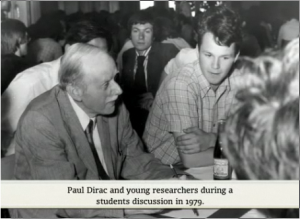
The Lindau Nobel Laureate homepage contains lots of videos of this annual gathering in the Constance Lake that brings together consecrated scientists and young researchers. You can find both lectures and short documentaries. In particular, 2008 was devoted to physics: the list of lectures is here, and there’s also a collection of short films featuring Gerardus `t Hooft and David Gross, among others, interviewed by young students. These Lindau meetings have been taking place since the 1950s, and one can find some funny stuff in there: for instance, there’s the recording of a talk by P.A.M Dirac himself, from 1979.

Lisa Randall talks with Charlie Rose

December 29, 2006 by jao

The first half of this Charlie Rose Video (hat tip Edge) is devoted to an interesting, if introductory, interview with Lisa Randall where she talks about physics and higher dimensions. Entertaining.

(I guess Rose is famous in some part of the world, but i’d never heard of him before. He is a good interviewer, and i like the minimalist stage with its zen-like black background, and the use of full-screen slides every now and then.)

Taking issue with String Theory

October 7, 2006 by jao

With the recent publication of Lee Smolin’s and Peter Woit’s books on the troubles of our theories of everything, every blogger in town seems to be talking about the crisis of modern fundamental physics (a.k.a. string theory and, so to speak, friends). Christine has just posted a list of recent posts on the subject. Like her, i’m reading Smolin’s book, courtesy of the publisher, and a review will eventually follow (once i find something to say about it that has not already been said!). In the meantime, i just wanted to add a few links to articles that i like on this pesky matter:

  • Jim’s Stab at String Theory is a very interesting discussion by Jim Weatherall on why it doesn’t really matters whether string theory is right. There you’ll find also a video interview with Peter Woit, by John Horgan (who is not specially happy with ST, either).
  • Among the free contents of the latest Physics Today issue, Burton Richter takes no prisoners when it comes to describe what’s wrong with all this super stuff.

I find Richter’s stabs, er, criticisms particularly compelling: his writing is clear and to the point, and his arguments are all but crisp and pungent. It’s curious that, by contrast, Smolin’s delicacy has actually augmented my curiosity on string theory (but i’m just halfway reading his book, so let’s better wait until i’m done).

On the other hand, i’m starting to be more and more in agreement with Weatherall’s arguments on the irrelevance of this whole business. At the very least, i’m trying to keep in mind that there’s arguably much more to fundamental physics than this debate. Maybe it’s time for some fresh air.

David Deutsch

October 1, 2006 by jao

DeutschI’ve just spent twenty minutes watching David Deutsch on TED Talks, a funny speech on our place in the universe (and what to do about that), by the author of The Fabric of Reality. I’ve not read his book, but, if his writing is as fresh as his speaking, i definitely should. Enjoy!

(A mostly unrelated but curious piece of trivia about David Deutsch: he’s also a Mac developer!)